To evaluate mobile broadcasting software for your radio station in 2026, focus on four core areas: real-time contribution capability, deployment flexibility, integration depth, and vendor reliability. The right platform should let journalists broadcast live from any location without specialist hardware, while connecting cleanly with your existing automation, scheduling, and distribution systems. The questions below walk through each evaluation criterion in practical terms.
What features matter most in mobile broadcasting software?
The most important features in mobile broadcasting software are low-latency audio transmission, location independence, and a workflow that requires no dedicated hardware beyond a smartphone. A journalist should be able to connect to a live broadcast, monitor programme output in real time, and contribute clean audio on cue, without a producer manually adjusting levels in the studio.
Beyond the basics of recording and transmission, look for invite-based guest access, which lets you bring external contributors or interview subjects into a live programme securely. Real-time programme monitoring is equally critical: a field reporter needs to hear exactly what is going out on air before they speak, so timing and handovers stay clean.
Automatic audio handling is a feature that separates professional-grade tools from consumer apps. When a journalist taps to go live, the system should respond by lowering background music and switching to the contribution feed without manual intervention. When the segment ends, the music should return. RadioMan® Lamppu demonstrates this approach: it won the NAB Show 2025 Radio award in part because it handles these transitions within the broadcast automation environment rather than requiring a separate mixing step.
Cross-platform availability also matters. Software that runs on iOS, Android, and any modern browser gives your team flexibility without forcing everyone onto the same device.
How does cloud-based deployment differ from on-premises radio software?
Cloud-based radio software runs its back-end processes on remote servers, meaning studios require no dedicated local hardware for playout or mixing. On-premises software runs entirely on hardware you own and maintain at your facility. The practical difference comes down to where your infrastructure lives, who manages it, and how easily you can scale or recover when something goes wrong.
With a cloud deployment, journalists and producers can access the system from any location using a browser. There is no workstation-specific software to install or update, and adding a new regional content window or remote production point does not require physical infrastructure changes. Documented deployments show broadcasters managing multiple regional feeds from a single central system without regional studios or hardware codecs.
On-premises deployments give you direct control over your hardware and network, which some broadcasters prefer for regulatory or latency reasons. A hybrid model, where core automation runs on-premises but back-end media processing or disaster recovery runs in the cloud, is a practical middle ground that many stations are adopting in 2026.
One important distinction: cloud-based broadcast software does not mean unmanaged. Failover and recovery in cloud environments still require deliberate configuration. When evaluating any platform, ask specifically how the vendor handles continuity if the primary system becomes unreachable, and whether backup environments can be activated without extended manual steps.
What integrations should radio broadcasting software support?
Radio broadcasting software should integrate with your traffic and ad scheduling system, music management platform, newsroom tools, media asset management (MAM) system, and your distribution channels, at minimum. Without these connections, your team ends up re-entering data between systems, which creates errors and slows production.
REST API support is the practical standard for these integrations in 2026. A platform that exposes a well-documented REST API can connect to virtually any third-party system, including newsroom automation tools, archiving platforms, and podcast production environments. This matters because no broadcaster uses a single vendor for everything, and your radio software needs to sit at the centre of a wider ecosystem rather than operate as an island.
Distribution integration is equally important. Your software should be able to push content to FM, DAB, web streams, and social media channels from a single workflow rather than requiring separate tools for each output. For news-driven stations, a direct connection between the newsroom system and the broadcast automation layer, so that scripts, clips, and rundowns flow without manual export, is worth prioritising during evaluation.
When assessing integration depth, ask vendors for specific examples of third-party systems their platform already connects to, and request documentation on how the API handles real-time data rather than batch transfers.
How do you assess vendor reliability for broadcast software?
Vendor reliability for broadcast software is best assessed through three factors: the vendor’s track record with comparable broadcasters, their support model, and their security and quality certifications. A vendor serving national public broadcasters and major commercial networks has demonstrated that their platform holds up under continuous, high-stakes broadcast conditions.
Support availability is non-negotiable in broadcasting. A 24-hour helpdesk is the baseline expectation, not a premium add-on. Ask how incidents are triaged, what the response time commitments are, and whether the vendor provides on-site or remote consultancy for complex deployments. References from existing customers in similar markets or with similar broadcast profiles are more useful than general testimonials.
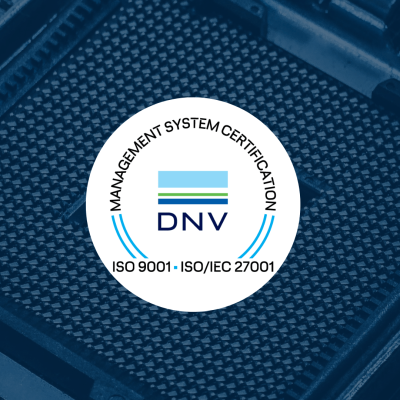
Security certifications give you an independent basis for evaluating how seriously a vendor manages data and system integrity. ISO 27001 certification, for example, indicates that a vendor’s information security practices have been audited against an internationally recognised standard, relevant when your broadcast systems are cloud-hosted or connected to external networks.
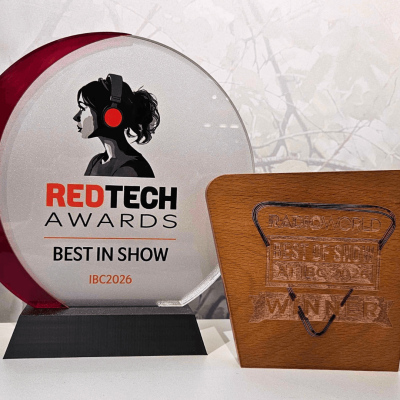
Also look at how long the vendor has been serving professional broadcasters and whether their product has a clear development roadmap. A platform that has been in continuous use since the early 1990s and continues to win industry recognition, such as multiple NAB and IBC awards, signals sustained investment rather than a product that will stall after initial deployment. If you want to explore what this looks like in practice, contact Jutel to discuss your station’s specific requirements.
When should a radio station switch its broadcasting software?
A radio station should consider switching its broadcasting software when the current system prevents remote or mobile production, cannot integrate with modern tools via API, requires hardware that is difficult to maintain or replace, or when the vendor no longer provides active development and support. These are operational constraints, not cosmetic issues, they directly limit what your team can produce and how resilient your broadcast is.
The clearest trigger is a workflow that requires journalists to be physically present in a studio to contribute to live programming. In 2026, location-independent production is a baseline expectation, not an advanced feature. If your current software cannot support a reporter broadcasting live from a sports venue or a remote location using only a smartphone, that gap will only grow more costly over time.
A second trigger is integration friction. If your team manually exports files between your automation system, newsroom, and ad scheduling platform, the cumulative time cost and error risk justify a serious evaluation of alternatives. Modern broadcast software should handle these data flows automatically.
Switching broadcast software is a significant project, and timing matters. The best transitions happen when a station can run parallel systems during a training period, with the new platform handling a defined subset of output before taking over fully. Ask any vendor you evaluate how they structure migration and what training they provide, a vendor with a documented onboarding process is far less risky than one that hands you a manual and wishes you well.